When Is a Child Ready for Potty Training, and What if It Stalls?
A child is usually ready for potty training when body, behavior and interest line up: staying dry for stretches, noticing the urge, following simple directions, and showing curiosity about the toilet. The timing varies widely, so age alone is a poor guide.
Written By: DocAi Health Editorial Team
Last Updated: 2026-10-02
A child is usually ready for potty training when body, behavior and interest line up: staying dry for stretches, noticing the urge, following simple directions, and showing curiosity about the toilet. The timing varies widely, so age alone is a poor guide. Most stalls come from starting too early, stool withholding, or stress, and are fixable. This article covers readiness signs, a calm way to begin, why training stalls, and when a doctor should look.
Is your child ready for potty training? The signs to look for
There is no single right age. Many children show readiness somewhere in the second or third year, and some are ready later, which is within the normal range. MedlinePlus (NIH) lists toilet training among the usual toddler milestones on its Toddler Development page, and it treats the timing as individual. Look at the whole child rather than the calendar.
Body signs
- Diapers stay dry for longer stretches, such as through a nap or for a couple of hours in the day.
- Bowel movements become more regular and predictable.
- The child can walk to the bathroom, pull pants up and down, and sit steadily on a potty seat.
Behavior and understanding
- The child tells you, by words, gestures or a particular face, that they are wetting or pooping, or are about to.
- They follow simple two-step directions, such as "get your shoes and bring them here."
- They dislike a wet or dirty diaper and may try to remove it.
- They show interest in the toilet, in siblings or parents using it, or in wearing underwear.
- They can say no without turning every request into a battle. A strong phase of refusing everything can make training harder, and some families choose to wait it out.
You do not need every sign. A child who shows several of them, most days, for a few weeks is often a good candidate. A child who shows none may do better if you pause and try again in a month or two. Starting later does not appear to harm development, and many children who begin later catch up quickly.
Getting ready before you start
A little preparation can make the first week less chaotic.
- Pick a stable stretch. A new baby, a move, a new daycare or an illness can add stress. Choose a period when routines are steady and an adult can be around.
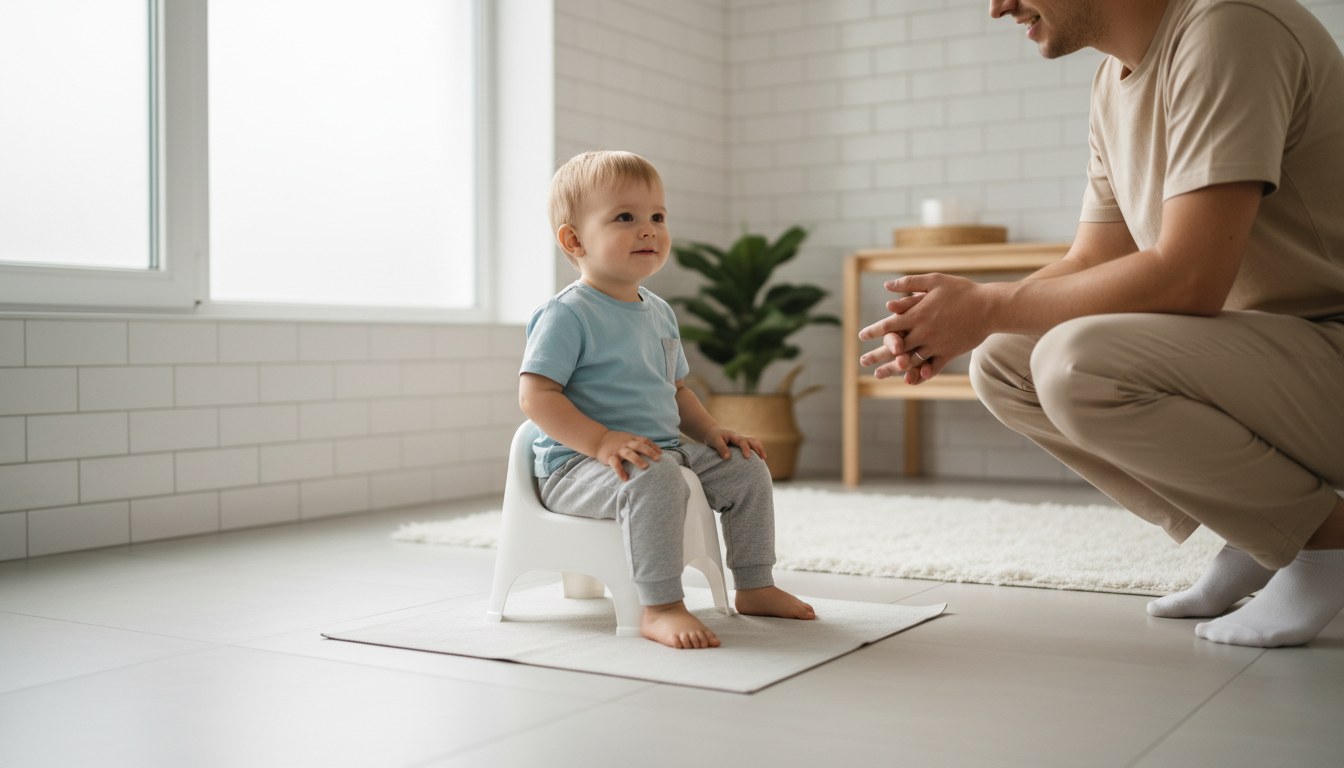
- Choose equipment together. A child-sized potty on the floor or a seat insert with a footstool lets the child feel supported. Feet resting on a stool can help with relaxing and pushing during a bowel movement.
- Introduce it casually. Let the child sit on the potty fully clothed, read a book there, or watch a stuffed animal "use" it.
- Teach words. Pick plain, neutral words for pee, poop and the toilet, and use them consistently with everyone who cares for the child.
- Stock easy clothing. Elastic-waist pants are easier than buttons or tights.
A calm way to begin
Many families use a simple routine: offer the potty at predictable times, such as after waking, after meals and before bath or bed, and let the child try for a few minutes. If nothing happens, that is fine. A short, relaxed try is better than a long one that feels like a punishment.
Praise the effort, such as sitting down or telling you they need to go, not only the result. Accidents are expected. Respond in a matter-of-fact way, help the child change, and move on. Scolding, shaming or pressuring a child can make them anxious about the toilet and may contribute to holding in urine or stool.
Handwashing belongs in the routine from the start, since toileting spreads germs easily. MedlinePlus has a page on Germs and Hygiene if you want a refresher on how to teach it. Wiping front to back is a useful habit to teach, especially for girls.
Training pants, pull-ups or underwear are all reasonable. Some children respond to the feeling of wetness in underwear, while others do fine with pull-ups for a while. Nighttime dryness usually comes later than daytime control and depends partly on physical maturity, so it is not a sign that daytime training failed. Older children who still wet the bed are covered in our article on bedwetting in older children.
Why potty training stalls
Several factors can contribute to a stall, and often more than one is present. The mechanism is not always clear, and it is often not a sign of anything medically wrong.
Starting before the child is ready
If the child does not yet notice the urge, or does not have the physical control, training can feel like a long string of accidents. Pausing for a few weeks and watching for the readiness signs above is a reasonable step.
Holding in stool
Some children hold in stool because they are afraid of the toilet or because a past hard or painful bowel movement hurt. Holding can make stool harder and bigger, which makes the next movement more painful, and a cycle can develop. Signs can include hiding or crossing legs when the urge comes, going only in a diaper, hard or large stools, belly discomfort, and soiled underwear. Liquid stool leaking around a hard stool mass can look like diarrhea but can reflect constipation. Our article on when a child should see a doctor for constipation covers this in detail. MedlinePlus describes leakage of stool in its Bowel Incontinence topic, mostly from an adult perspective, and a clinician can tell you how that applies to a young child.
Fear, stress or big changes
Fear of the flush, the height of the seat, or the sound of the toilet can lead to refusing. A new sibling, a move, a change in child care, a family illness or conflict can also set children back. A child who was doing well and then has frequent accidents may be reacting to stress, though a medical cause should be considered too.
Power struggles
Toddlers are building independence. If the toilet becomes a place for arguments, some children refuse on principle. Lowering the pressure, offering choices (which underwear, which book to read on the potty) and taking a break can help.
Developmental or medical factors
Some children take longer because of developmental differences, sensory sensitivities, or medical conditions. Constipation and urinary tract problems are among the medical possibilities. If you are unsure, a pediatrician can help sort out whether this is a readiness issue or something that deserves a closer look.
Regression after being trained
A child who had been using the toilet for weeks or months and then starts having frequent accidents is common. Stress, illness, a new routine, constipation, or simply being absorbed in play can all be involved. Stay calm, review the routine, and offer the potty at set times again. If the change comes with pain when urinating, a new need to urinate very often, fever, foul-smelling urine, belly or back pain, or a child who seems unwell, a urinary infection may be part of the picture. Our article on signs of a urinary tract infection in young children explains those symptoms. MedlinePlus also discusses bladder control problems on its Urinary Incontinence page.
What helps when training is stuck
- Take a planned break. Return to diapers or pull-ups for a few weeks without framing it as failure. Many children restart more easily after a pause.
- Treat constipation first. If stools are hard or painful, ask the pediatrician what approach is appropriate for your child. Do not give laxatives, stool softeners or other medicines to a young child without clinician direction, and follow the product label and the clinician's instructions.
- Make the potty comfortable. Add a footstool, a smaller seat, or let a fearful child sit on a potty with the diaper on first, then gradually take the diaper off.
- Keep a simple log. Noting when your child wets or poops can show a pattern you can use to time potty visits.
- Be consistent across caregivers. Share the plan and the words with grandparents, child care providers and babysitters.
- Use rewards lightly. A sticker chart or a small treat can motivate some children, while others find rewards add pressure. Choose what fits your child.
Safety at the toilet
Toddlers are curious and can get into harmful things in the bathroom. Keep toilet bowl cleaners, drain openers, bleach, medicines and other cleaning supplies locked away or out of reach, along with button batteries (found in some remote controls, scales and musical books) and small magnets. MedlinePlus has information on Household Products and their hazards. Never leave a young child alone in a bathtub, and do not leave a very young child unattended near a toilet with water in it.
If a child swallows a medicine or cleaner, call Poison Control at 1-800-222-1222 right away, even if the child seems well, and have the container ready. Do not make your child vomit or give anything to drink unless Poison Control tells you to. If the child is hard to wake, having trouble breathing or having a seizure, call 911. A swallowed button battery or magnet is an emergency even when the child has no symptoms: call 911 or go to the nearest emergency room right away.
When to talk with a pediatrician
Many stalls are normal and settle with patience. Consider a visit if any of these apply:
- Your child cries or strains with bowel movements, passes hard stools, or holds in stool for days.
- Stool leaks into underwear, or you see a pattern of soiling after the child had been using the toilet.
- Your child complains of pain when urinating, urinates very often, or has repeated daytime wetting after a period of dryness.
- You notice blood in the stool or on the toilet paper.
- Your child has fever, belly pain, vomiting, or seems unusually sleepy or unwell.
- Your child has been trying for several months with no progress at all, or you are worried about developmental concerns.
The clinician will usually ask about stool and urine habits, diet and fluids, and your routine, and will examine your child. They combine history, physical examination and, in some cases, testing to decide on next steps. Tell them about any medicines your child takes.
Keeping perspective
Almost all children become toilet trained, and the pace differs a great deal from child to child. A calm, patient approach and attention to constipation and other medical issues tend to serve families better than a strict timeline. If you are unsure whether your child is ready or why progress has stopped, your pediatrician can help you decide on the next step.
When to Seek Medical Care
When to Seek Urgent or Emergency Care
Potty training itself is not dangerous, but a few problems that surface during it, such as swallowed bathroom products, severe belly illness or a serious infection, need emergency help. This guidance is in addition to, not a replacement for, the general disclaimer above.
Emergency, call 911 or go to the emergency room immediately if:
- Your child swallowed a medicine, cleaner or other bathroom product: call Poison Control at 1-800-222-1222 right away with the container ready, even if they seem well, and do not induce vomiting or give drinks unless they advise it. Call 911 if your child is hard to wake, limp, having trouble breathing, or having a seizure.
- Your child swallowed a button battery or a magnet, even if they seem fine, so call 911 or go to the nearest emergency room right away.
- Your child has a hard, swollen belly with severe pain and repeated vomiting, especially if the vomit is green, because a serious blockage or other emergency may be present.
- Your child with a fever or urinary symptoms is very sleepy, hard to rouse, pale or mottled, or breathing fast, which can be signs of a serious infection.
- Your child has heavy rectal bleeding or passes a large amount of blood and looks pale, faint or unresponsive.
- Your child shows signs of severe dehydration, such as being very drowsy and unable to drink, with no urine for a long stretch and a very dry mouth.
See a doctor soon (same-day or next available appointment) if:
- Your child has pain when urinating, urinates very often, or has foul-smelling urine, especially with fever or belly or back pain, and needs a same-day evaluation.
- Your child has hard, painful stools, holds in stool, or has liquid stool leaking into underwear, which can reflect constipation that a clinician should assess.
- You see blood on the stool or toilet paper, or a small amount of blood in the diaper, and your child is otherwise alert and drinking.
- Your child was reliably using the toilet and now has frequent daytime accidents with no clear stress or change, which a clinician may want to look into.
Frequently Asked Questions
What age should a child start potty training?
There is no single correct age. Many children show readiness during their second or third year, and some are ready later, which is still within the normal range. Watching for signs such as staying dry for stretches, telling you when they need to go, and following simple directions is usually more useful than choosing a birthday.
How do I know my toddler is ready to use the potty?
Signs can include dry diapers for longer periods, regular bowel movements, interest in the toilet, dislike of dirty diapers, and the ability to follow simple directions and pull pants up and down. You do not need every sign. If your child shows several of them most days for a few weeks, you can reasonably try.
Is it okay to pause potty training if it is not working?
Yes. Many families take a break of a few weeks and restart more successfully. Framing it as a pause, not a failure, keeps pressure low. Use the time to look for constipation, fear of the toilet or stress, and talk with your pediatrician if you suspect a medical cause.
Why does my child refuse to poop on the potty?
Some children are afraid of the toilet, dislike the feeling of sitting, or hold stool after a painful bowel movement. Several factors can contribute. Try a comfortable seat with a footstool, keep the mood relaxed, and ask your pediatrician about constipation, since hard stools can make holding worse.
My child was trained and now has accidents again. Is that normal?
Setbacks are common and often follow stress, illness, a new sibling or a change in routine. Return to a calm routine and offer the potty at set times. If accidents come with pain when urinating, fever, frequent urination, or hard stools, call your pediatrician, since an infection or constipation may be contributing.
Should I use rewards or sticker charts?
Rewards can motivate some children, and others feel pressured by them. If you use them, keep them small and tied to effort, such as sitting on the potty, not only to results. If the chart causes tears or arguments, drop it and focus on praise and routine.
When is potty training a medical concern?
Consider talking with your pediatrician if your child has painful or hard stools, stool leaking into underwear, pain with urination, repeated daytime wetting after being dry, blood in the stool, or no progress after several months of trying. The clinician can assess constipation, urinary problems and development, and suggest next steps.
Related articles
When Should a Child See a Doctor for Constipation?Bedwetting in Older Children: When Is It a Medical Issue?Signs of a Urinary Tract Infection in Young ChildrenSources
- MedlinePlus (NIH) - Toddler Development
- MedlinePlus (NIH) - Bowel Incontinence
- MedlinePlus (NIH) - Urinary Incontinence
- MedlinePlus (NIH) - Germs and Hygiene
- MedlinePlus (NIH) - Household Products