What Does Low Ferritin Mean if Your Hemoglobin Is Still Normal?
Low ferritin with a normal hemoglobin usually means your body's iron stores are running low, but the shortage has not yet reached the point of causing anemia.
Written By: DocAi Health Editorial Team
Last Updated: 2026-07-20
Low ferritin with a normal hemoglobin usually means your body's iron stores are running low, but the shortage has not yet reached the point of causing anemia. Ferritin is often the first iron marker to drop, so a low result is an early warning that you may be becoming iron deficient. This guide explains what the number means, why it can be low while your blood count still looks fine, and what to do next.
What Ferritin Measures
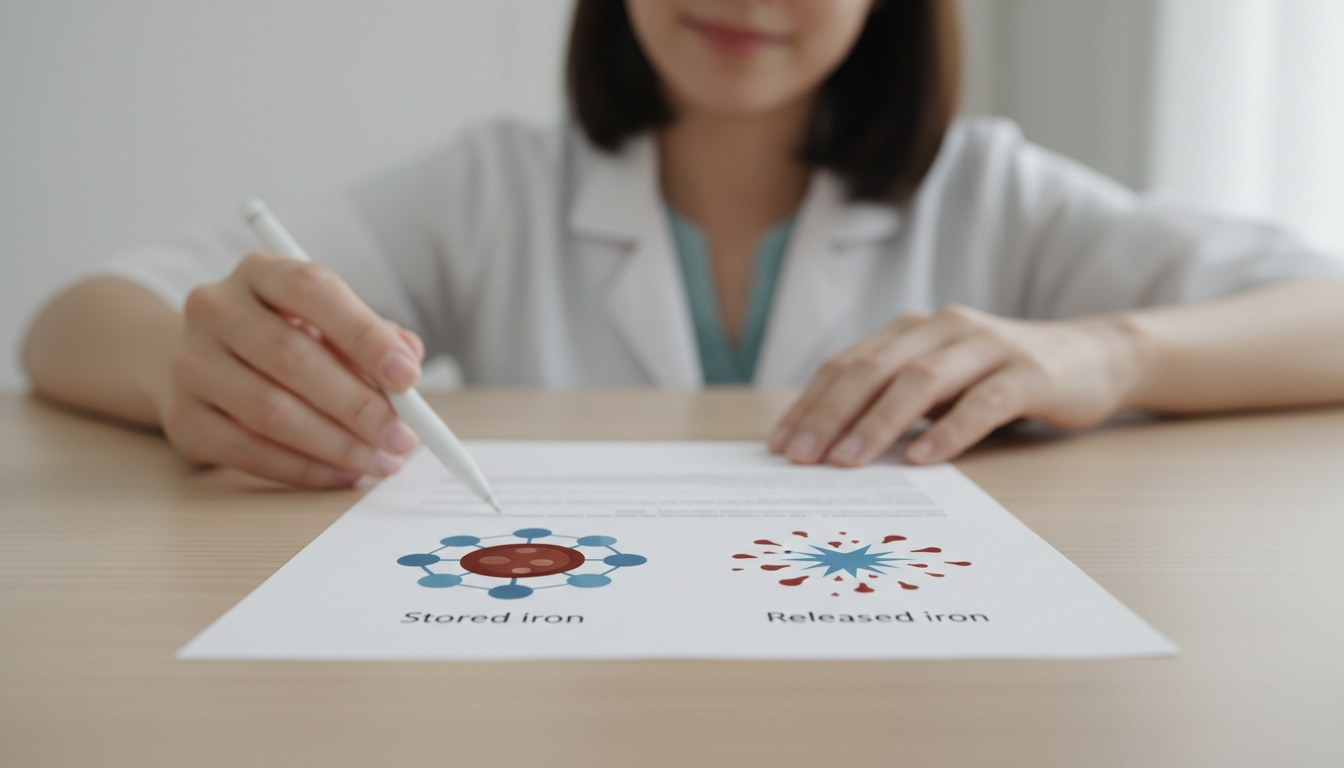
What it measures: Ferritin is a protein that stores iron inside your cells. The amount of ferritin in your blood reflects how much iron your body has in reserve. Think of ferritin as the level in your iron "savings account," while hemoglobin is the iron your body is actively spending to build red blood cells and carry oxygen.
Because your body draws down its stored iron before the amount in circulation runs short, ferritin usually falls before hemoglobin does. That is why a ferritin test can catch iron deficiency at an earlier stage than a hemoglobin measurement or a standard complete blood count alone.
Why Ferritin Can Be Low While Hemoglobin Is Still Normal
Iron deficiency does not happen all at once. It develops in stages, and a low ferritin with a normal hemoglobin is a snapshot of the early part of that process.
- Stage 1, iron depletion: Your iron stores shrink and ferritin drops, but your body still makes enough healthy red blood cells. Hemoglobin stays normal. This is sometimes called iron deficiency without anemia.
- Stage 2, iron-deficient red cell production: Stores are empty and your body starts to struggle to make red cells efficiently, though hemoglobin may still be borderline normal.
- Stage 3, iron-deficiency anemia: Iron is low enough that hemoglobin finally falls, and the standard blood count now shows anemia.
So a low ferritin with normal hemoglobin most often means you are in that first stage. It is good news in the sense that it was caught early, and it is a useful prompt to find out why your iron reserves are dropping before anemia has a chance to set in.
Ferritin Ranges: What Counts as Low
Reference ranges differ between laboratories, and normal ferritin tends to run higher in men than in premenopausal women. Your report will list the specific range your lab uses. The general picture looks like this:
| Ferritin level (ng/mL) | What it usually suggests |
|---|---|
| Below about 15 | Depleted iron stores; strongly suggests iron deficiency |
| About 15 to 30 | Low iron stores; iron deficiency is likely, especially if you have symptoms |
| About 30 to 100 | Generally adequate iron stores in a healthy adult |
| Above your lab's upper limit | Can reflect inflammation, infection, liver disease, or less often iron overload |
One important catch: ferritin also rises when there is inflammation or infection anywhere in the body, because it acts as an acute-phase protein. That means a ferritin in the "normal" range can sometimes hide a real iron shortage. If your clinician suspects this, they may repeat the test or add other iron studies to get a clearer picture.
Common Causes of Low Ferritin
Low iron stores come down to some combination of losing iron, taking in too little, or having trouble absorbing it. Common causes include:
- Blood loss. Heavy menstrual periods are the most common cause in premenopausal women. Bleeding in the digestive tract, from ulcers, polyps, or other sources, is an important cause to rule out in men and postmenopausal women. Frequent blood donation can also lower stores.
- Not enough dietary iron. Diets low in iron-rich foods, including some vegetarian or vegan patterns that are not carefully planned, can leave you short over time.
- Higher iron needs. Pregnancy, periods of rapid growth, and heavy endurance training all raise how much iron your body uses.
- Poor absorption. Conditions such as celiac disease or inflammatory bowel disease, long-term use of certain acid-reducing medications, and some weight-loss surgeries can reduce how much iron you absorb from food.
Symptoms of Low Iron Stores Before Anemia
You can feel the effects of low iron before your hemoglobin ever drops. Possible symptoms include fatigue and low energy, reduced exercise tolerance, trouble concentrating or a "brain fog" feeling, hair thinning or increased shedding, brittle nails, restless legs syndrome, feeling cold, and sometimes unusual cravings for ice or non-food items. None of these prove iron deficiency on their own, since they overlap with many other conditions, but paired with a low ferritin they help explain how you feel and point toward a fixable cause.
What Your Result Means and What to Do Next
A single low ferritin is a signal, not a complete diagnosis. Your clinician will read it alongside your symptoms, diet, and menstrual or bleeding history, and may order additional iron studies such as serum iron, total iron-binding capacity, and transferrin saturation, or look for a source of blood loss.
Treatment usually starts with finding and addressing the underlying cause, then rebuilding iron through iron-rich foods and, when needed, iron supplements taken exactly as your clinician directs. It is best not to start high-dose iron on your own, because too much iron can be harmful and the reason your stores dropped still needs attention. Refilling ferritin is slow, and it can take several months for stores to recover even after you start feeling better, so follow-up testing is used to confirm progress.
One point worth flagging: in men and in women past menopause, iron deficiency is not considered a normal finding and usually prompts an evaluation for a bleeding source in the digestive tract, even when there are no obvious symptoms.
When to Seek Medical Care
When to Seek Urgent or Emergency Care
Low ferritin itself is rarely an emergency, and most results are followed up with your provider on a routine basis. But a few situations linked to blood loss or severe anemia need faster attention. This guidance is in addition to, not a replacement for, the general disclaimer above.
Emergency, call 911 or go to the emergency room immediately if:
- You vomit blood or material that looks like coffee grounds, or you pass black, tarry, or bloody stools. These can signal significant bleeding in the digestive tract.
- You have chest pain, fainting or near-fainting, or severe shortness of breath at rest. These can mean anemia or another problem is straining your heart and need emergency care.
- You have very heavy vaginal bleeding, such as soaking through one or more pads or tampons every hour for several hours, or passing large clots along with dizziness or lightheadedness.
See a doctor soon (same-day or next available appointment) if:
- You have a low ferritin result along with fatigue, hair shedding, restless legs, or reduced exercise tolerance.
- You have heavy menstrual periods that leave you tired or lightheaded.
- You are a man or a postmenopausal woman with iron deficiency, which should be evaluated for a digestive cause even without obvious symptoms.
- Your iron deficiency does not improve after a few months of treatment, or it keeps coming back.
Frequently Asked Questions
Can you have low ferritin with a normal hemoglobin?
Yes. Ferritin measures stored iron and usually falls before hemoglobin does, so a low ferritin with a normal hemoglobin often means early iron deficiency that has not yet become anemia.
What ferritin level is considered low?
Laboratories vary, but a ferritin below about 15 ng/mL strongly suggests depleted iron stores, and many clinicians treat levels under about 30 ng/mL as low when symptoms are present. Ferritin can read falsely normal when you have inflammation or infection.
Can low ferritin cause symptoms without anemia?
Yes. Fatigue, poor concentration, hair shedding, brittle nails, restless legs, and reduced exercise tolerance can appear while iron stores are low, before hemoglobin drops. These symptoms have other causes too, so they should be checked.
How do you raise low ferritin?
Treatment focuses on the cause plus rebuilding iron through iron-rich foods and, when needed, iron supplements taken exactly as your clinician directs. Refilling ferritin can take several months, and follow-up testing confirms progress.
Is low ferritin something to worry about?
Low ferritin is usually treatable, but it is worth finding the cause. In men and postmenopausal women especially, it can point to bleeding in the digestive tract that needs evaluation.
Sources
- MedlinePlus (National Library of Medicine, NIH) - Ferritin blood test
- Mayo Clinic - Iron deficiency anemia - Symptoms & causes
- National Heart, Lung, and Blood Institute (NIH) - Anemia - Iron-Deficiency Anemia
- NIH Office of Dietary Supplements - Iron - Consumer
- World Health Organization (WHO) - Serum ferritin concentrations for the assessment of iron status in individuals and populations: technical brief