How to Prevent Falls at Home for Older Adults
Most falls at home happen for reasons you can change.
Written By: DocAi Health Editorial Team
Last Updated: 2026-08-01
Most falls at home happen for reasons you can change. The largest gains come from three things done together: removing the specific hazards that trip people, such as loose rugs, dim stairs, and a dark path to the bathroom, building leg strength and balance a few times a week, and reviewing the medical causes of unsteadiness, including blood pressure that drops on standing and medications that sedate. This guide walks the house room by room, covers the exercises that work, and lists the signs after a fall that need an emergency room.
Why a Trip Turns Into a Fall After 65
Younger people trip constantly and rarely land, because the recovery step catches them: a foot shoots forward and the hip pulls the body back over its base. That reaction slows with age, and ankle and hip strength decide whether the catch holds.
Three changes stack on top. Foot clearance drops, so a toe that once cleared a carpet edge now catches it. The eyes need more light and longer to adjust to a dark hall. And the sense of where your feet are, carried by nerves in the soles and ankles, fades with age and diabetes. The house that was safe at 55 is a hazard at 78, unchanged.
The Room by Room Fixes Worth Doing First
The bathroom and the nighttime path to it return the most safety per dollar spent.
- Bathroom. Grab bars beside the toilet and inside the tub, screwed into studs or solid backing; a suction cup bar pulls off the wall under a falling adult. Add a rubber tub mat and a shower chair.
- The night path. A lamp within arm's reach of the pillow, motion sensor night lights low along the route, and a floor clear of shoes and pet bowls. Sit on the bed edge and count slowly to twenty before standing.
- Floors. Take up throw rugs or tape every edge down. Repair curled carpet and loose vinyl at doorways, run cords along the walls, and wipe spills immediately.
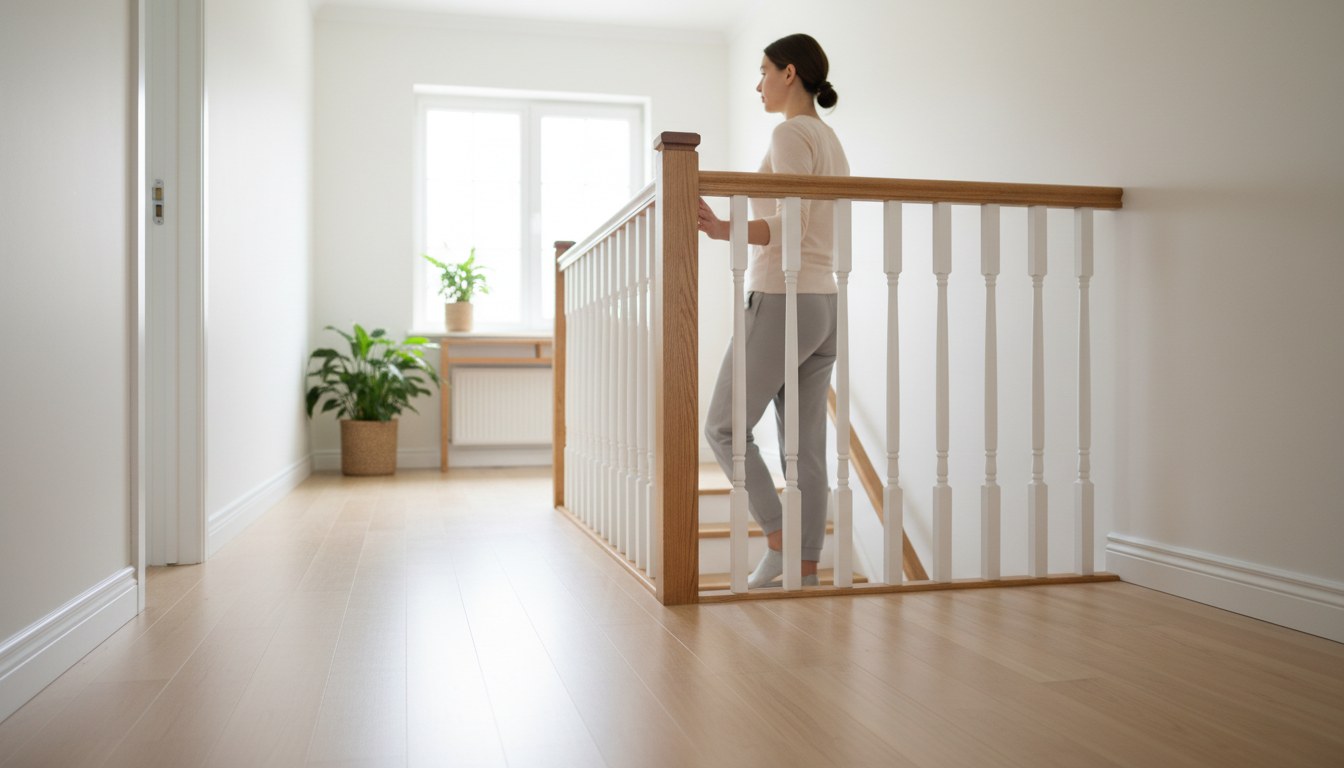
- Stairs. Handrails on both sides that run past the last step, so your hand does not run out of rail before your foot runs out of stairs. Mark the top and bottom step edges with contrasting tape.
- Kitchen. Move daily items to between hip and shoulder height and buy a long-handled reacher. Standing on a chair for a high cabinet is a common way a healthy older adult breaks a hip.
- Shoes indoors. A firm heel counter and a thin non-slip sole. Socks on tile, backless slippers, and thickly cushioned soles each cost you grip or the ability to feel the floor.
- A phone on the body. A phone charging in the kitchen does nothing for someone lying in the bathroom. Keep it in a pocket, or wear a waterproof alert pendant.
Strength and Balance: The Part No Purchase Can Replace
Home fixes remove hazards. They do nothing for the reaction that failed. Balance and leg strength improve with practice at any age.
Sit-to-stand. From a firm dining chair, stand without using your hands, then sit slowly under control. Ten repetitions, twice a day. This trains the muscles that catch a stumble.
Single leg stands. Fingertips on the counter, lift one foot slightly, and build toward 30 seconds each side, keeping the counter within reach.
Heel-to-toe walking. Walk a hallway placing each heel directly in front of the opposite toes, with a wall within reach.
Classes and professional help. Tai chi and supervised balance programs have strong support for reducing falls, because they train weight shifting and slow controlled movement. If walking already feels unsteady, ask for a physical therapy referral. A cane should reach your wrist crease with the arm hanging down, and goes in the hand opposite the weaker leg.
The Medical Causes Behind Unsteady Legs
Blood pressure that drops on standing. Lying down lets blood pool in the legs, and standing requires the vessels to push it back within seconds. In older adults that correction is often slow, so you gray out or stagger when you are least stable, worse in the morning, after a large meal, in heat, or when short on fluids. Standing in two stages prevents many of these, and our guide to dizziness on standing covers the testing.
Medications. Sedatives, sleep aids, opioids, some antidepressants, blood pressure drugs, diabetes medicines that can drive blood sugar too low, and older allergy pills all raise fall risk, and risk climbs with the number of daily medicines. Bring every bottle, supplements included, to one visit a year for a fall risk review, and never stop a prescription on your own. See which drug classes are most often involved.
Vision. Looking down at a step through the reading portion of bifocals or progressive lenses blurs the edge and shifts where it appears to be, so many people do better with a single-distance pair kept for stairs. Cataracts and an outdated prescription cost the same detail; get a yearly eye exam.
Feet and sensation. Numbness, burning, or a walking-on-foam feeling points to peripheral neuropathy, often from diabetes or vitamin B12 deficiency, which removes the feedback your foot uses to sense the floor. Bunions and long toenails also change your gait.
Bone strength changes the stakes. Preventing falls and protecting bone are two halves of one job, because the fall that bruises at 60 breaks a hip at 80. Ask about vitamin D, calcium, and bone density screening, and read the quiet signs of bone loss that appear before a fracture.
Bladder urgency and alcohol. Rushing to the bathroom at night, half asleep and in the dark, is a classic setup; treating urgency or keeping a bedside commode removes the rush. Alcohol worsens balance and blood pressure control at amounts that felt harmless decades ago.
What to Do After a Fall, Even One That Seemed Minor
Getting up. Roll onto your side, push onto hands and knees, crawl to a sturdy chair, hands on the seat, bring your stronger leg forward into a kneel, and push up to turn and sit.
If you cannot get up. Time on the floor is a medical problem by itself: hours of lying still cause dehydration, a dangerous drop in body temperature, pressure injuries, and muscle breakdown that can damage the kidneys. Reach your phone or alarm, pull down anything that works as a blanket, and keep shifting position.
Head strikes and blood thinners. Anyone on warfarin (Coumadin), apixaban (Eliquis), rivaroxaban (Xarelto), clopidogrel (Plavix), or daily aspirin who hits their head needs emergency evaluation even when they feel fine, because bleeding between the skull and the brain can build slowly and surface hours or days later. The delayed signs listed in the box below mean calling 911 whether or not a blood thinner is involved, since a stroke produces the same picture and is equally time-critical.
Hips and spines. Hip or groin pain with an inability to bear weight, or a leg that looks shorter or rotated outward, should be treated as a possible broken hip until proven otherwise: call 911 and keep the person still rather than walking it off. Neck or back pain with new numbness, weakness, or loss of bladder or bowel control points to a spinal cord injury and also needs 911 without moving them.
Did they trip, or black out? Someone who tripped remembers the rug. Someone with no memory of falling, or who felt the room fade first, may have fainted from a heart rhythm problem, which needs a cardiac workup rather than a bandage. Chest pain, a pounding heartbeat, or breathlessness around the fall belongs there too.
Report every fall. One fall is the strongest predictor of the next, and most never get mentioned at the following visit. Telling your clinician triggers a real assessment: medication review, blood pressure lying and standing, a gait and balance test, and vision and foot checks.
When to Seek Medical Care
When to Seek Urgent or Emergency Care
Most falls at home cause bruises and a scare. A few produce injuries that are dangerous precisely because the person feels fine at first. This guidance is in addition to, not a replacement for, the general disclaimer above.
Emergency, call 911 or go to the emergency room immediately if:
- Someone hit their head in a fall and takes a blood thinner such as warfarin (Coumadin), apixaban (Eliquis), rivaroxaban (Xarelto), clopidogrel (Plavix), or daily aspirin. Go now even if they seem completely normal.
- After any head strike there is a headache that keeps worsening, repeated vomiting, confusion, slurred speech, face droop, one-sided weakness, an unequal pupil, or the person is hard to wake.
- There is hip, groin, or thigh pain and the person cannot put weight on that leg, or one leg looks shorter or turned outward. Do not help them walk anywhere.
- There is neck or back pain along with new numbness, tingling, weakness in the arms or legs, or loss of bladder or bowel control. Do not move the person.
- The person has no memory of falling, blacked out, or fell along with chest pain, a pounding heartbeat, or shortness of breath.
- Someone has been on the floor an hour or more, cannot get up on their own, or is found cold, confused, or unable to pass urine afterward.
See a doctor soon (same-day or next available appointment) if:
- You have fallen at least once in the past year, even without injury, or you keep catching yourself on furniture.
- You feel lightheaded or gray out for a few seconds nearly every time you stand up from a bed or chair.
- You started or changed any medicine, including an over the counter sleep aid, and now feel drowsy or unsteady.
- Your feet feel numb or like you are walking on foam, or you have started catching your toes on carpet edges.
- Pain from a fall is worsening day by day instead of settling, or you cannot use a wrist or shoulder normally.
- You have started avoiding stairs, showers, or going outdoors because you are afraid of falling.
Frequently Asked Questions
Are suction cup grab bars safe in a shower?
They can release without warning on textured tile or across a grout line. Anyone at real risk of falling needs a bar screwed into wall studs, or a tension-mounted floor to ceiling pole in a rental.
Should an older adult wear shoes inside the house?
In most cases yes. Socks and backless slippers on wood or tile cause many indoor falls. A firm heel counter and a thin non-slip sole grip better and let you feel the floor.
Is a cane or a walker better for someone who feels unsteady?
A cane suits mild unsteadiness or one weaker leg; a walker suits someone needing real weight support. Have a physical therapist size it, since a device set too tall raises risk.
Does a medical alert button actually make a difference?
It does not prevent falls, but it shortens time on the floor, where much of the harm comes from. Choose a waterproof pendant that stays on in the shower.
Should you go to the ER after a fall if nothing hurts?
Go if the head was struck and the person takes a blood thinner or daily aspirin, or if there was any loss of consciousness. Otherwise call the doctor's office the same day.
Do vitamin D supplements prevent falls?
They help someone who is deficient, but routine supplements have not been shown to reduce falls in people with normal levels. Ask whether your level should be checked first.
Related articles
Medications That Raise Fall Risk in SeniorsWhy Do Older Adults Get Dizzy When Standing Up?Early Signs of Osteoporosis Before a Fracture HappensSources
- Centers for Disease Control and Prevention (CDC) - About Older Adult Fall Prevention
- National Institute on Aging (NIA, NIH) - Falls and Fractures in Older Adults: Causes and Prevention
- MedlinePlus (National Library of Medicine, NIH) - Falls
- American Geriatrics Society: Prevention of falls in older persons.
- U.S. Preventive Services Task Force (USPSTF) - Falls Prevention in Community-Dwelling Older Adults: Interventions
- Mayo Clinic - Fall Prevention: Simple Tips to Prevent Falls