Can a Blood Test Diagnose Depression or Anxiety?
No, a blood test cannot diagnose depression or anxiety. Clinicians diagnose both by talking with you about your symptoms, how long they have lasted, and how they affect daily life, often with a screening questionnaire.
Written By: DocAi Health Editorial Team
Last Updated: 2026-10-05
No, a blood test cannot diagnose depression or anxiety. Clinicians diagnose both by talking with you about your symptoms, how long they have lasted, and how they affect daily life, often with a screening questionnaire. Blood tests still have a role: they can look for medical conditions and medicine effects that can mimic or worsen mood symptoms. This article explains what labs can and cannot show, which ones are commonly ordered, and which symptoms need urgent care.
Can a blood test diagnose depression or anxiety?
At this time, no blood test is established for diagnosing depression or an anxiety disorder. Researchers have studied many biological differences in people with depression, including signaling chemicals in the brain, stress hormones and inflammation. A review in PubMed Central, Linking molecules to mood: new insight into the biology of depression, describes how complex and incompletely understood this biology is. Several factors appear to contribute, and none has become a reliable stand-alone test for use in an exam room.
So when you see an ad for a "depression blood test" or a "serotonin level," treat it with caution. A blood serotonin result does not reflect what is happening inside the brain in a way that guides diagnosis or treatment.
How depression and anxiety are actually diagnosed
Diagnosis is clinical. Your clinician asks about mood, interest in usual activities, sleep, appetite, energy, concentration, worry, panic and thoughts of self-harm. They also ask how long the symptoms have lasted and how much they interfere with work, school and relationships. MedlinePlus, in its Depression overview, describes depression as a common but serious mood disorder that affects how you feel, think and handle daily activities.
Many clinics add a short questionnaire to structure the conversation. Your score can help guide the visit, but it is not a diagnosis by itself. If you want to understand those scores, see our article on PHQ-9 and GAD-7 scores.
Why clinicians still order blood work
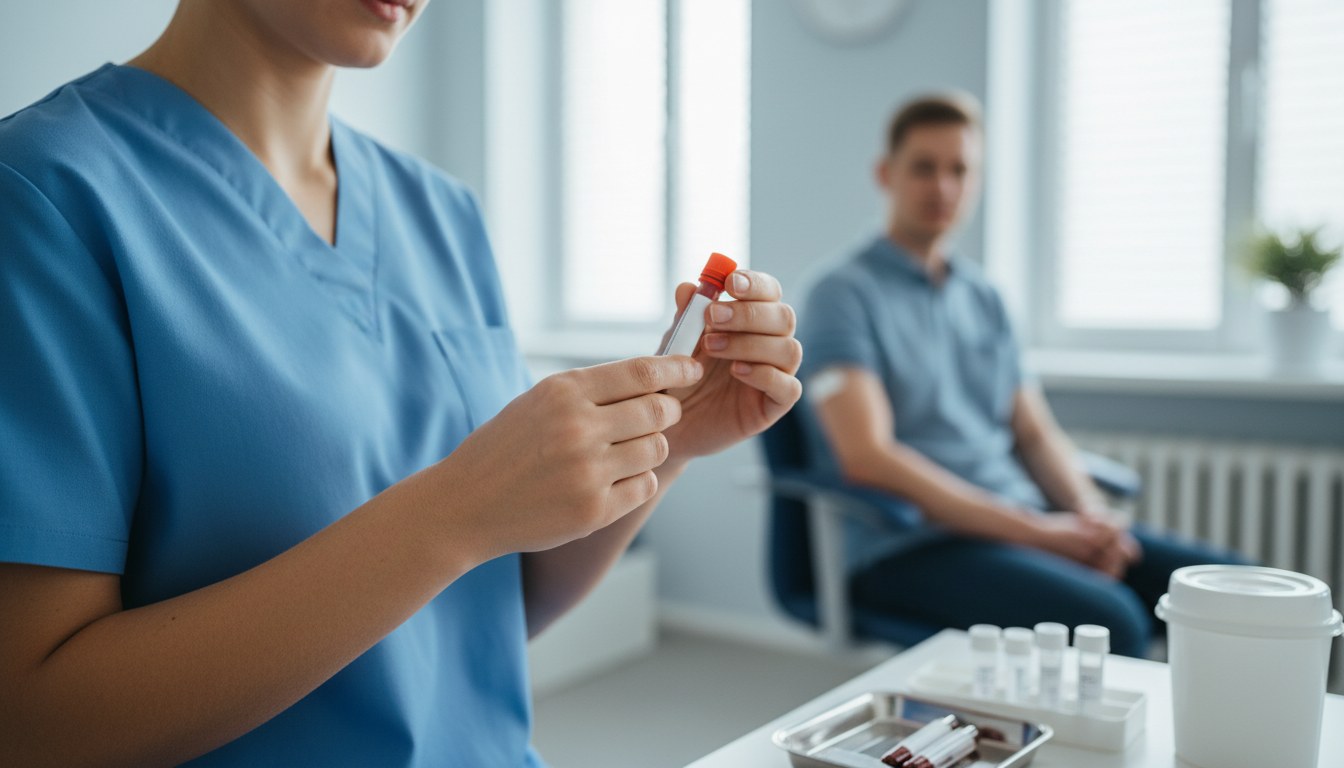
If you come in with low mood, fatigue, restlessness or racing thoughts, your clinician may want to check whether a physical condition is contributing. Symptoms of depression and anxiety overlap with many medical problems. Labs help clinicians combine history, examination and testing to look for other explanations. They do not replace the mental health evaluation, and a normal result does not mean your symptoms are not real.
The choice of tests depends on your age, symptoms, medicines and medical history. Not everyone needs all of them.
Blood tests clinicians commonly consider
- Complete blood count (CBC): can show anemia, which may cause tiredness, low energy and trouble concentrating.
- Thyroid tests (such as TSH): thyroid hormone levels that are too high or too low can be associated with anxiety, low mood and sleep changes. We cover this in detail in our article on thyroid problems and mood.
- Blood glucose or A1C: blood sugar problems can cause shakiness, fatigue and irritability. MedlinePlus notes in its Diabetes Type 2 overview that diabetes is a long-term condition affecting how the body uses sugar.
- Basic metabolic panel: checks electrolytes such as sodium and calcium, plus kidney function. Abnormal levels can cause confusion, weakness or changes in mood.
- Vitamin B12 and vitamin D: sometimes checked when symptoms or risk factors suggest a deficiency, though results do not by themselves establish a cause for mood symptoms.
- Liver tests: may be considered when alcohol use or medicine effects are a concern.
- Pregnancy test or other hormone tests: considered in some cases, for example when periods have changed. Primary ovarian insufficiency is one condition that can involve hormone changes.
Other tests, such as screening for infections including HIV, may be offered depending on your situation.
What a "normal" or "abnormal" result can tell you
If your labs are normal, that does not rule out depression or anxiety. It means that the tests that were run did not find one of the medical contributors. Your clinician will still take your symptoms seriously and discuss treatment options such as talk therapy, medicine or both.
If a result is abnormal, it may be one contributor among several. Treating a thyroid problem or anemia, for example, can sometimes improve mood symptoms, but outcomes vary. Depression can also occur alongside a medical condition, including in people recovering from a stroke, and both may need care.
Medicines, substances and other conditions that can look like a mood disorder
Blood work is one piece. Your clinician will also review what you take. Some prescription medicines, alcohol, cannabis, stimulants and other substances can affect mood, sleep and anxiety. MedlinePlus has background on Medicines and Prescription Drug Misuse. Tell your clinician about everything you use, including supplements and over-the-counter products, so they can decide what is relevant. Do not change the dose or timing of a prescribed medicine on your own; ask the prescriber or pharmacist. Stopping some medicines suddenly, including antidepressants and benzodiazepines, can cause withdrawal symptoms or a return of symptoms, and for some medicines it can be dangerous. Ask your prescriber how to taper safely.
Other conditions can also resemble depression. In older adults, memory problems and sudden confusion may point to something other than a mood disorder. MedlinePlus describes Delirium as a sudden state of confusion that needs prompt medical attention. Postpartum mood changes have their own guidance, so tell your clinician if symptoms begin during or after pregnancy. Some psychiatric conditions involve symptoms beyond mood, such as hallucinations or fixed false beliefs. These are much less common than everyday stress, depression or anxiety, and a single symptom does not establish any of them.
Direct-to-consumer and genetic "mood" tests
Some companies sell home kits or panels that claim to identify depression, anxiety or the "best" antidepressant. Evidence for using these results to diagnose a mood disorder is limited. Some pharmacogenetic tests are used in certain clinical settings to inform medicine choices, but they do not diagnose depression. If you are thinking about one, talk with your clinician about whether it would add anything to your care.
What to do next
- Write down your symptoms, when they started and how they affect your days.
- List your medicines, supplements, alcohol and other substance use.
- Book a visit with a primary care clinician or mental health professional.
- Ask what labs, if any, they think are appropriate for you and why.
- Complete any screening questionnaire as honestly as you can.
If you are unsure whether it is time to reach out, our article on signs it is time to talk to someone about your mental health can help.
Treatment for depression and anxiety, and medicine safety
Depression and anxiety are treatable, and treatment options vary. Many people benefit from talk therapy such as cognitive behavioral therapy, medicine, or a combination. A review in PubMed Central on cognitive-behavioral therapy for patients with coronary artery disease and depression reflects how therapy is studied in people who also have medical illness. Antidepressant labeling carries a boxed warning about increased suicidal thoughts and behavior in children, teens and young adults under 25, so your prescriber should monitor you closely when you start or change one. If your mood worsens or suicidal thoughts appear after starting or changing a medicine, tell your prescriber right away. Ask your prescriber before stopping any prescribed medicine.
If you ever have thoughts of ending your life, call or text 988, the Suicide and Crisis Lifeline, in the United States at any hour. If you are in immediate danger, call 911.
When to Seek Medical Care
When to Seek Urgent or Emergency Care
Mood and anxiety symptoms are usually managed with a scheduled visit, but some situations are emergencies. The lists below separate what needs 911 or the emergency room right now from what needs care soon. This guidance is in addition to, not a replacement for, the general disclaimer above.
Emergency, call 911 or go to the emergency room immediately if:
- You have a plan or intent to end your life, or you have already harmed yourself and are in danger; call 911, and call or text 988 if you can safely do so.
- You have sudden confusion, trouble speaking, face drooping or weakness on one side, which can be signs of stroke or another medical emergency rather than a mood problem.
- You have chest pain or pressure, trouble breathing, or fainting, even if you think it may be anxiety or a panic attack, because a heart or lung problem can feel like panic.
- You have taken too much of a medicine or substance, on purpose or by accident; call 911 or Poison Control at 1-800-222-1222.
- You feel you cannot keep yourself or others safe, or you are in danger of harming someone; call 911, or call or text 988 if you can do so safely.
- You are suddenly seeing or hearing things that are not there; go to the emergency room, and call 911 if you cannot get there safely or feel in danger.
See a doctor soon (same-day or next available appointment) if:
- You have felt sad, empty or hopeless most days for two weeks or longer, or symptoms are getting in the way of work, school or relationships; see a clinician soon.
- You have thoughts of death or self-harm, even without a plan or intent: call or text 988 now for support and contact a clinician the same day. Call 911 if you feel you may act on them.
- Anxiety, panic attacks or worry are frequent enough that you avoid usual activities or cannot sleep.
- Mood symptoms began after starting, changing or stopping a medicine, so your prescriber or pharmacist can review it with you.
- You have new mood changes along with unexplained weight change, extreme tiredness, heat or cold intolerance, or a fast heartbeat, which a clinician may want to evaluate with lab tests.
Frequently Asked Questions
Is there a blood test for depression?
No blood test is established for diagnosing depression. Clinicians diagnose it by asking about your symptoms, their duration and their effect on daily life, sometimes with a screening questionnaire. Blood tests may be ordered to look for other conditions, such as thyroid problems or anemia, that can cause similar symptoms or contribute to them.
Can a blood test show anxiety?
Not directly. Anxiety disorders are diagnosed from your symptoms and history. Blood work can check for conditions that can cause anxiety-like symptoms, including an overactive thyroid or blood sugar problems. A normal result does not mean your anxiety is not real or that treatment would not help you.
What blood tests are done for depression?
Clinicians commonly consider a complete blood count, thyroid tests, glucose or A1C, and a metabolic panel. Vitamin B12 or vitamin D may be checked in some cases. The exact list depends on your symptoms, age, medicines and history, and not everyone needs every test.
Can low vitamin D or B12 cause depression?
Low levels may be associated with fatigue and low mood in some people, but a deficiency is only one possible contributor and does not establish a cause. Your clinician can decide whether testing makes sense for you, and whether correcting a deficiency might help alongside other treatment.
Is a serotonin blood test accurate for depression?
Blood serotonin levels are not used to diagnose depression. They do not reflect the activity of serotonin in the brain in a way that guides treatment. If a company offers one, ask your clinician whether it would add anything, since it is unlikely to change your care.
Do genetic tests tell me which antidepressant to take?
Some pharmacogenetic tests are used in certain settings to inform medicine choices, but they do not diagnose depression and cannot predict with certainty how you will respond. Ask your prescriber whether a test is appropriate for you, and do not change a medicine based on a result without their guidance.
If my labs are normal, does that mean it is all in my head?
No. Normal labs mean the tests that were run did not find a medical contributor. Depression and anxiety are real health conditions diagnosed by clinical evaluation, and they respond to treatments such as therapy and medicine. Your symptoms deserve care whatever your lab results show.
Who should I see if I think I have depression or anxiety?
A primary care clinician is a reasonable first stop, since they can talk through symptoms, consider medical contributors and refer you onward. You can also see a psychiatrist, psychologist, counselor or licensed therapist directly. If you ever have thoughts of ending your life, call or text 988 at any hour.
Related articles
Can a Blood Test Tell You If You're in Menopause?Can a Thyroid Problem Cause Anxiety or Depression?Signs It's Time to Talk to Someone About Your Mental HealthSources
- MedlinePlus (NIH) - Depression
- MedlinePlus (NIH) - Diabetes Type 2
- MedlinePlus (NIH) - Medicines
- MedlinePlus (NIH) - Prescription Drug Misuse
- MedlinePlus (NIH) - Delirium
- PubMed Central (NIH) - Linking molecules to mood: new insight into the biology of depression
- PubMed Central (NIH) - Cognitive-Behavioral Therapy for Patients with Coronary Artery Disease and Depression: A Systematic Review