Why Are Older Adults More Vulnerable in Heat Waves?
Older adults are more vulnerable in heat waves because several factors can combine: the body may sense heat and sweat less effectively, long-term conditions such as heart and kidney disease add strain, and some medicines affect fluid balance or cooling.
Written By: DocAi Health Editorial Team
Last Updated: 2026-10-04
Older adults are more vulnerable in heat waves because several factors can combine: the body may sense heat and sweat less effectively, long-term conditions such as heart and kidney disease add strain, and some medicines affect fluid balance or cooling. Heat illness can progress from cramps and exhaustion to heatstroke, which is an emergency. This article explains why older adults are at higher risk, which warning signs matter, and when to call 911 or seek same-day care.
Why older adults are more vulnerable in heat waves
No single change explains it. Several factors usually add up, and the research describes age, health status, income and living conditions as overlapping risks. A review in PubMed Central on heatwave impacts on vulnerable groups looked at age, income and disability together, and a Lyon, France study compared physiological and socio-economic vulnerability. Both support the idea that risk comes from a combination, not one cause.
MedlinePlus lists older age among the groups at higher risk for heat illness. Heat illness covers a range of problems, from heat cramps and heat exhaustion to heatstroke, the most serious form.
How the aging body handles heat differently
The body cools mainly by moving blood toward the skin and by sweating. With age, these responses can change in several ways, though the details vary from person to person and the mechanisms are not fully understood.
- Sensing heat: Some older adults may notice rising temperatures later, so they may not feel hot or thirsty until they are already strained.
- Sweating and blood flow: Sweating and skin blood flow may respond less efficiently, which can make it harder to shed heat.
- Thirst and fluids: Thirst can be a less reliable cue, and some people drink less on purpose to avoid bathroom trips. Our article on How Much Water Should an Older Adult Drink a Day? covers daily fluid needs.
- Heart and circulation: Cooling asks the heart to work harder. A heart that is already weakened or a blood pressure that drops easily can make this harder to manage.
Health conditions that raise the risk
Long-term conditions can make the body less able to adapt to heat. Heart disease, lung disease, diabetes, kidney disease and dementia are examples that clinicians commonly consider. Kidney problems can affect how the body handles fluid and salt, and they are often unnoticed in older adults; see Why Chronic Kidney Disease Often Goes Undiagnosed in Older Adults.
Conditions that limit movement or thinking can also matter. A person with dementia, for example, may not recognize that a room is too hot or may not be able to ask for water. Someone with limited mobility may not be able to leave an overheated home.
Medicines that can add to heat risk
Some prescription and over-the-counter medicines can affect fluid balance, sweating, blood pressure or alertness. Examples that clinicians often review in hot weather include diuretics ("water pills"), some blood pressure and heart medicines, some antihistamines and some medicines for mood or sleep. Not everyone who takes these has a problem, and the effect depends on the person and the dose.
Do not stop, skip or change the timing or dose of a prescription on your own. Instead, ask the prescriber or pharmacist before or during a heat wave whether any of your medicines need attention in hot weather, and read the label for sun and heat cautions.
Where and how a person lives matters
Home conditions can be as important as biology. Upper-floor apartments, homes without air conditioning, and neighborhoods with little shade can stay hot, including overnight. Research on temperature and mortality in places such as Greater Vancouver and Seoul describes how risk can differ between neighborhoods on the same hot day.
Living alone, limited income, difficulty with transportation and reluctance to run air conditioning because of cost can also raise risk. Social isolation matters because heat illness can impair thinking, so a person may not be able to call for help.
Early warning signs of heat illness
MedlinePlus describes heat illness as a spectrum. Early signs can include:
- Heavy sweating, muscle cramps or weakness
- Headache, dizziness or nausea
- Cool, clammy skin or a fast, weak pulse
- Unusual tiredness or feeling faint
These can suggest heat exhaustion. In an older adult, they can also overlap with other problems such as a medicine side effect, an infection or a heart condition, so a clinician usually combines the history, examination and testing to sort it out.
When heat illness becomes an emergency
Heatstroke can occur when the body can no longer control its temperature. It may cause confusion, agitation, slurred speech, fainting, seizures, or hot skin with very little sweating, and it can be life-threatening. Older adults may show confusion or unusual drowsiness before they report feeling hot. A high temperature reading alone does not decide the tier, so pair it with these symptoms. If you see them, call 911.
While waiting for help, move the person to a cooler place, remove extra clothing, and cool the skin with cool water or wet cloths and fanning. Do not give fluids to someone who is confused or cannot swallow safely. MedlinePlus First Aid pages describe general steps for heat emergencies.
Practical ways to lower the risk
- Stay in cool spaces: Air conditioning is the most reliable option. If a home is not cooled, a local cooling center, library or other public air-conditioned building may help during the hottest part of the day.
- Drink regularly: Sip fluids through the day instead of waiting for thirst. If a clinician has limited your fluids because of heart, kidney or liver disease, ask them what is right for you.
- Dress lightly: Loose, light-colored, breathable clothing helps, and cool showers or damp cloths can help lower body heat.
- Limit exertion: Move errands and exercise to cooler hours.
- Check in: Family, friends or neighbors can call or visit during heat waves, especially those who live alone or have memory problems.
- Review medicines: Ask the prescriber or pharmacist about heat-related cautions.
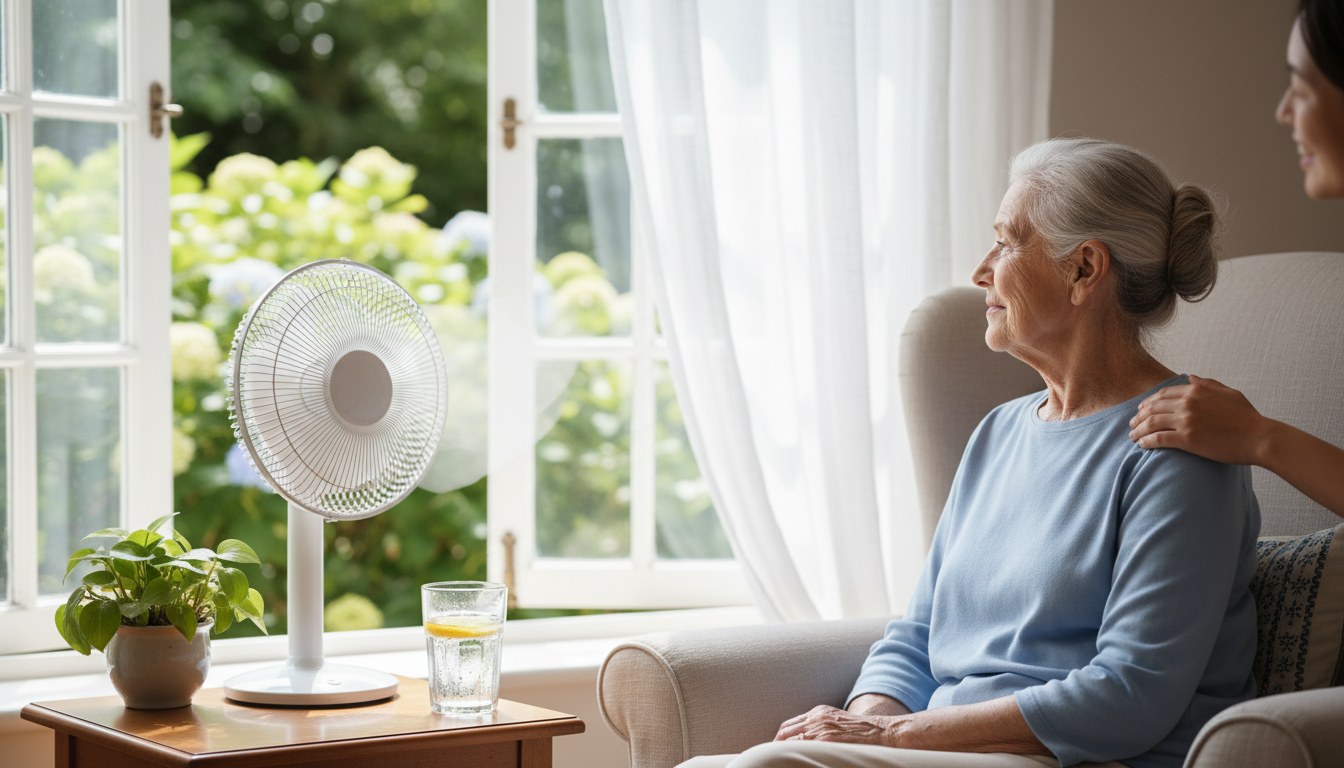
Fans can be helpful for comfort, but they may not protect against heat illness when air temperatures are very high, so do not rely on a fan alone if someone has symptoms.
The contrast with cold
Older adults can also be affected by cold. If your concern is feeling chilled, see Why Do Older Adults Feel Cold All the Time?. This article focuses on heat.
Caring for someone else during a heat wave
If you look after an older relative, check on them at least once a day during very hot weather, and more often if they live alone or have dementia. Look at whether the home feels hot, whether they are drinking, whether they are more tired or confused than usual, and whether they can reach cool air. Changes in alertness are an important sign and deserve prompt attention.
When to Seek Medical Care
When to Seek Urgent or Emergency Care
Heatstroke can cause brain, heart and organ damage and can progress quickly in older adults. Use the first list for symptoms that need 911 now, and the second for same-day or next-available care. This guidance is in addition to, not a replacement for, the general disclaimer above.
Emergency, call 911 or go to the emergency room immediately if:
- Confusion, agitation, slurred speech or unusual drowsiness in an older adult who has been in the heat, which can be a sign of heatstroke.
- Fainting or being unable to stay awake or be woken normally after heat exposure.
- A seizure during or after hot weather exposure.
- Hot, flushed skin with very little sweating along with a fast pulse, headache or nausea, which can suggest heatstroke.
- Chest pain, severe shortness of breath or a very fast or irregular heartbeat during hot weather.
- Vomiting repeatedly so the person cannot keep fluids down, together with weakness or confusion.
See a doctor soon (same-day or next available appointment) if:
- Heavy sweating, cramps, dizziness or weakness that does not improve after moving to a cool place and drinking fluids, so a clinician can assess for heat exhaustion.
- Much less urine than usual, very dark urine or a very dry mouth during a heat wave, which can suggest dehydration.
- Lightheadedness when standing, or a fall, in hot weather, especially if you take blood pressure medicines or diuretics.
- A person with heart, kidney or lung disease who feels worse in the heat, or who has swelling or breathlessness that is new.
- Uncertainty about whether a medicine needs attention in hot weather, which is a good reason to call the prescriber or pharmacist the same day.
Frequently Asked Questions
At what age does heat become a bigger risk?
There is no single age at which risk changes. Heat risk generally rises with age, and MedlinePlus lists older adults among the higher-risk groups. Chronic conditions, medicines, living alone and lack of air conditioning can matter as much as age. A healthy 70-year-old with cool housing may be at lower risk than a frail person in a hot apartment.
Can a fan keep an older adult safe in a heat wave?
A fan can improve comfort, but it may not prevent heat illness when air temperatures are very high, and it does not replace cooler air. Air conditioning, a cooling center, cool showers or damp cloths, and fluids are generally more reliable. If someone has symptoms of heat illness, move them somewhere cooler and get medical advice.
Which medicines make heat illness more likely?
Some diuretics, blood pressure and heart medicines, certain antihistamines and some mood or sleep medicines can affect fluids, blood pressure or sweating. Effects differ by person and dose. Do not stop or change any prescription on your own. Ask the prescriber or pharmacist whether your medicines need any extra caution during hot weather.
How can I tell heat exhaustion from heatstroke?
Heat exhaustion often involves heavy sweating, weakness, headache, nausea and cool, clammy skin. Heatstroke is more dangerous and can involve confusion, fainting, seizures or hot skin with little sweating. Because older adults may not describe how they feel, a change in alertness or behavior is a reason to call 911.
Should I give an older person water if they seem overheated?
If the person is alert and able to swallow, sips of cool fluid can help while you move them somewhere cooler. If they are confused, very drowsy, vomiting or unable to swallow safely, do not force fluids and call 911. People on fluid limits from a clinician should ask what is right for them.
Why might an older adult not feel hot or thirsty?
Temperature sensing and thirst can change with age, and some conditions such as dementia may affect awareness or the ability to ask for help. The mechanisms are not fully understood. This is why family and neighbors checking in, and offering fluids regularly, can be useful during a heat wave.
Is it safe for an older adult to exercise during a heat wave?
Many people can stay active, but heat adds strain, especially with heart, lung or kidney disease or certain medicines. Choosing cooler hours, taking breaks and staying hydrated can help. Ask your clinician what level of activity suits your health, and stop and seek care for dizziness, chest pain, confusion or severe weakness.
What can I do if I cannot afford air conditioning?
Local cooling centers, libraries, senior centers and other public air-conditioned places may offer relief during the hottest hours. Many communities and utilities also have assistance programs, and your local health department or area agency on aging can tell you what is available. Cool showers and damp cloths can help at home.
Related articles
How Much Water Should an Older Adult Drink a Day?Why Do Older Adults Feel Cold All the Time?Why Chronic Kidney Disease Often Goes Undiagnosed in Older AdultsSources
- MedlinePlus (NIH) - Heat Illness
- MedlinePlus (NIH) - First Aid
- MedlinePlus (NIH) - Climate Change
- PubMed Central (NIH) - Compound impact of heatwaves on vulnerable groups considering age, income, and disability
- PubMed Central (NIH) - A Comparative Study of the Physiological and Socio-Economic Vulnerabilities to Heat Waves of the Population of the Metropolis of Lyon (France) in a Climate Change Context
- PubMed Central (NIH) - Delineation of Spatial Variability in the Temperature-Mortality Relationship on Extremely Hot Days in Greater Vancouver, Canada
- PubMed Central (NIH) - Climate change and temperature extremes: A review of heat- and cold-related morbidity and mortality concerns of municipalities