Why Do I Bruise So Easily All of a Sudden?
Sudden easy bruising is usually harmless and comes from thinning skin with age, a new medication like aspirin or a blood thinner, or a vitamin C shortage.
Written By: DocAi Health Editorial Team
Last Updated: 2026-07-29
Sudden easy bruising is usually harmless and comes from thinning skin with age, a new medication like aspirin or a blood thinner, or a vitamin C shortage. Less often, it points to a liver problem, a low platelet count, or, rarely, a blood disorder that needs prompt testing. This guide walks through the common causes and the signs that mean it's time to see a doctor.
1. Aging and Thin Skin (Senile Purpura)
What it is: A common, harmless cause of easy bruising that comes with getting older, sometimes called senile or actinic purpura.
Why it happens: As skin ages, the layer of fat and collagen underneath it thins, so blood vessels have less cushioning and tear more easily with only minor bumps.
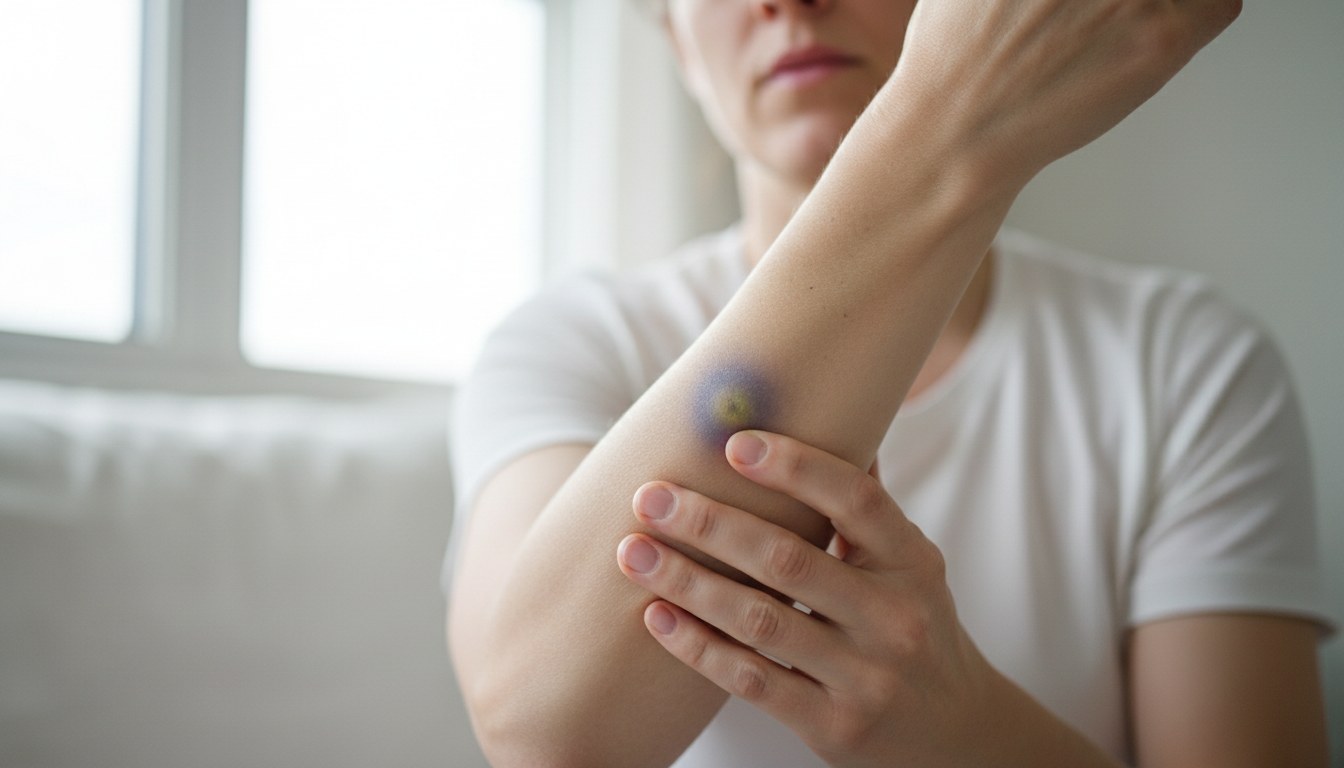
Common symptoms: Dark purple or red patches, most often on the forearms and the backs of the hands, that appear after a bump you may not even remember. The bruises can look striking but usually fade over one to a few weeks.
Risk factors: Older age, long-term sun exposure, and skin that has thinned from years of outdoor activity.
When to seek evaluation: If bruises are limited to sun-exposed areas like the arms and hands and you feel otherwise well, this usually is not urgent, but mention it at your next checkup.
2. Blood-Thinning Medications and Supplements
What it is: Bruising that starts or worsens after beginning a medication or supplement that affects how blood clots.
Why it happens: Aspirin, other NSAIDs (such as ibuprofen or naproxen), prescription blood thinners, and corticosteroids can each reduce the blood's ability to clot or make blood vessels more fragile. Fish oil and some herbal supplements can add to this effect.
Common symptoms: Bruises that appear more easily than before, look larger than expected for a small bump, or show up in unusual places.
Risk factors: Starting a new prescription blood thinner, taking daily aspirin or NSAIDs, using long-term steroid pills, or combining several of these at once.
When to seek evaluation: Tell your prescribing doctor about new or increased bruising. Do not stop a prescribed blood thinner on your own, since stopping suddenly carries its own risks.
3. Vitamin C Deficiency
What it is: A shortage of vitamin C, a nutrient the body needs to keep blood vessel walls strong.
Why it happens: A diet very low in fruits and vegetables over weeks to months can lower vitamin C enough to weaken the small blood vessels under the skin.
Common symptoms: Easy bruising, tiny red-purple dots on the skin, slow-healing wounds, and sometimes bleeding gums.
Risk factors: A very limited diet, some restrictive eating patterns, and digestive conditions that affect how well nutrients are absorbed.
When to seek evaluation: A routine doctor visit can review your diet and order blood work if needed. This is not an emergency but is worth addressing.
4. Heavy Alcohol Use
What it is: Bruising related to the effect of regular heavy drinking on nutrition and liver function.
Why it happens: Alcohol can interfere with how well the body absorbs nutrients, including vitamin C and vitamin K, and over time it can affect the liver's ability to make clotting factors.
Common symptoms: Bruising that appears with little or no injury, sometimes along with fatigue, a poor appetite, or stomach upset.
Risk factors: Regular heavy alcohol use over an extended period.
When to seek evaluation: If you are concerned about your drinking or notice new bruising along with it, a doctor can check your liver function and help you cut back safely.
5. Liver Disease
What it is: A reduced ability of the liver to make the proteins the body needs to form blood clots.
Why it happens: Conditions such as fatty liver disease, hepatitis, or cirrhosis can damage liver cells over time, lowering the supply of clotting factors the liver produces.
Common symptoms: Easy bruising, sometimes along with yellowing of the skin or eyes, swelling in the belly or legs, dark urine, or ongoing fatigue.
Risk factors: Heavy alcohol use, viral hepatitis, obesity, and certain metabolic conditions.
When to seek evaluation: New bruising along with yellowing skin, significant swelling, or confusion should be checked promptly. Bruising without these signs still deserves a doctor visit.
6. Low Platelet Count (Thrombocytopenia)
What it is: A drop in platelets, the blood cells that help blood clot.
Why it happens: This can follow a viral infection, certain medications, an autoimmune reaction where the body attacks its own platelets (immune thrombocytopenia, or ITP), or a bone marrow problem.
Common symptoms: Bruising that appears easily and in unusual spots, tiny red-purple dots on the skin (petechiae) especially on the lower legs, and sometimes bleeding gums or a nosebleed that takes longer than usual to stop.
Risk factors: A recent viral illness, certain medications, autoimmune conditions, and pregnancy.
When to seek evaluation: New unexplained bruising with petechiae or unusual bleeding calls for a blood test soon. A simple blood count can find a low platelet level.
7. Inherited Bleeding Disorders (such as von Willebrand Disease)
What it is: A lifelong condition affecting how well blood clots, present from birth but sometimes not noticed until adulthood.
Why it happens: The body makes too little of a specific clotting protein, or the protein does not work as well as it should.
Common symptoms: Bruising easily since childhood or young adulthood, frequent nosebleeds, heavy menstrual periods, or heavier than expected bleeding after dental work or surgery.
Risk factors: A family history of a bleeding disorder or a personal history of heavy bleeding after minor procedures.
When to seek evaluation: If bruising has been a lifelong pattern, especially with heavy periods or bleeding after procedures, ask a doctor about testing for a bleeding disorder.
8. Blood Cancers (Leukemia and Related Bone Marrow Disorders)
What it is: A cancer of the blood-forming cells in the bone marrow that can crowd out normal platelet production.
Why it happens: Abnormal cells build up in the bone marrow and interfere with its ability to make enough healthy platelets and other blood cells.
Common symptoms: Bruising or bleeding that appears without explanation, along with unusual fatigue, frequent infections, fever, night sweats, or unintended weight loss.
Risk factors: Older age, certain genetic conditions, prior chemotherapy or radiation, and exposure to some chemicals, though many cases have no clear cause.
When to seek evaluation: New bruising combined with persistent fatigue, fever, night sweats, or weight loss should be evaluated promptly with blood tests. This combination should not be ignored.
When to Seek Medical Care
When to Seek Urgent or Emergency Care
Most sudden bruising is caused by thin skin, a medication effect, or a temporary nutrient shortage, and is not dangerous. But a few situations need urgent attention. This guidance is in addition to, not a replacement for, the general disclaimer above.
Emergency, call 911 or go to the emergency room immediately if:
- Widespread bruising or a rash of tiny purple or red spots appears along with a high fever, a stiff neck, confusion, or a severe headache.
- Bruising follows a head injury and comes with worsening headache, repeated vomiting, confusion, slurred speech, or unusual sleepiness.
- You have signs of significant internal bleeding along with bruising, such as vomiting blood or dark material, black or bloody stools, blood in the urine, or a nosebleed that will not stop after 20 minutes of direct pressure.
- You develop sudden weakness, numbness, facial drooping, or slurred speech, especially if you take a blood thinner.
- Bruising or bleeding occurs along with fainting, chest pain, or shortness of breath.
See a doctor soon (same-day or next available appointment) if:
- New, unexplained bruises keep appearing without a known injury.
- Bruising comes with fatigue, unusual paleness, frequent infections, fever, or night sweats.
- Bruising is paired with unusually heavy periods, frequent nosebleeds, or bleeding gums when brushing.
- You recently started or changed the dose of a blood thinner, aspirin, NSAID, or steroid and bruising has increased.
- Bruising appears along with joint pain or swelling that is not explained by an injury.
Frequently Asked Questions
What causes sudden easy bruising in adults?
Most sudden bruising in adults comes from thinning skin with age, a new blood-thinning medication or supplement, or a temporary vitamin C shortage. Less often it points to a liver problem, a low platelet count, or a bleeding disorder.
Is easy bruising a sign of leukemia?
Easy bruising alone is rarely a sign of leukemia. It becomes more concerning when it comes with unexplained fatigue, fever, night sweats, frequent infections, or weight loss, in which case a doctor should order blood tests.
Can vitamin deficiency cause easy bruising?
Yes. A diet very low in vitamin C over weeks to months can weaken small blood vessels and lead to easy bruising, along with slow-healing wounds and bleeding gums.
Why do I bruise more as I get older?
Skin naturally loses collagen and the fatty layer that cushions blood vessels as we age, so even a light bump can tear a vessel and cause a bruise that might not have happened years earlier.
Does aspirin cause easy bruising?
Yes. Aspirin and other NSAIDs reduce how well platelets stick together to form a clot, which can make bruises appear more easily and look larger than usual.
When should I worry about easy bruising?
See a doctor soon if bruising is new, spreading, or comes with tiny red-purple spots, unusual bleeding, fatigue, fever, or weight loss. Seek emergency care for bruising after a head injury with confusion or vomiting, or bruising along with signs of internal bleeding.
Can stress cause bruising?
Stress itself does not directly cause bruises, but poor sleep, appetite changes, and skipped meals during stressful periods can affect nutrition in ways that make bruising more noticeable.
Sources
- MedlinePlus (National Library of Medicine, NIH) - Bruises | Contusion | MedlinePlus
- Mayo Clinic - Easy bruising: Why does it happen? - Mayo Clinic
- National Heart, Lung, and Blood Institute (NIH) - Platelet Disorders - Thrombocytopenia | NHLBI, NIH
- Centers for Disease Control and Prevention (CDC) - Meningococcal Disease Symptoms and Complications | Meningococcal | CDC
- U.S. Food and Drug Administration (FDA): Safety information on NSAIDs and anticoagulant medications.