How Much Iron Do You Need During Pregnancy?
Most pregnant women need about 27 milligrams of iron a day, roughly 50 percent more than before pregnancy. Iron supports the large increase in blood volume that carries oxygen to the placenta and the growing baby.
Written By: DocAi Health Editorial Team
Last Updated: 2026-07-26
Most pregnant women need about 27 milligrams of iron a day, roughly 50 percent more than before pregnancy. Iron supports the large increase in blood volume that carries oxygen to the placenta and the growing baby. Most prenatal vitamins already contain close to this amount, but what you eat and how you take your supplement can change how much of it your body actually absorbs.
Why Iron Needs Go Up During Pregnancy
Blood volume expands: During pregnancy, your body makes significantly more blood than usual to carry oxygen and nutrients to the placenta and the baby. Iron is a building block of hemoglobin, the protein in red blood cells that carries that oxygen, so more blood means a higher demand for iron.
The baby builds its own iron stores: Your baby draws iron from you to grow and to build up reserves that will help support them for the first several months after birth, before they start eating iron-containing foods.
Delivery involves blood loss: Some blood loss during labor and delivery is normal and expected, which is another reason your provider wants your iron levels in a good place well before your due date.
How Much Iron You Actually Need
Recommended amount: The recommended dietary allowance for iron during pregnancy is 27 mg a day, compared with 18 mg a day for most adult women who are not pregnant. This higher target is meant to cover both your own expanded blood supply and the iron your baby needs to grow.
Prenatal vitamins: Most standard prenatal vitamins already contain iron at or close to this target, which is one reason providers recommend starting one before or early in pregnancy rather than relying on diet alone.
Individual needs vary: If you started pregnancy with low iron stores, are carrying multiples, or are diagnosed with anemia, your OB or midwife may recommend a higher dose or a separate iron supplement in addition to your prenatal vitamin, based on your blood test results. Do not add your own extra iron supplement without asking your provider first.
Best Food Sources of Iron
Heme iron, most easily absorbed: Lean red meat, poultry, and fish or shellfish contain heme iron, which your body absorbs more efficiently than the iron found in plant foods.
Non-heme iron, plant sources: Beans, lentils, tofu, spinach and other leafy greens, and iron-fortified breakfast cereals all provide iron, though it is absorbed less efficiently on its own.
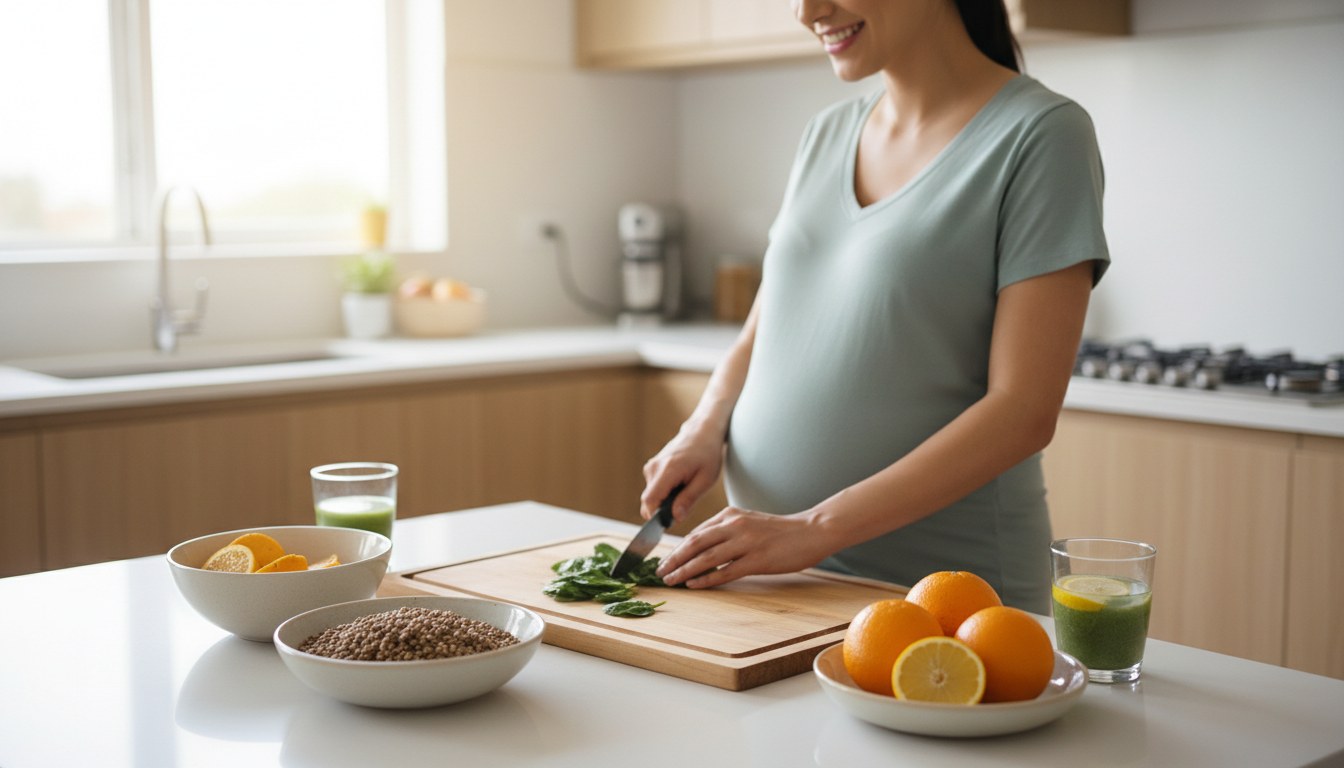
Boost absorption with vitamin C: Pairing iron-rich foods with a source of vitamin C, such as citrus fruit, tomatoes, or bell peppers, helps your body absorb more of the non-heme iron in a meal.
Watch for absorption blockers: Coffee, tea, and calcium-rich foods or supplements taken at the same time can reduce how much iron your body takes in. Spacing these apart from your iron-rich meals or your supplement, by an hour or two if possible, can help.
Taking an Iron Supplement Safely
When it is recommended: If bloodwork shows your iron stores are low or you are diagnosed with iron deficiency anemia, your provider may prescribe an iron supplement on top of, or in place of, your regular prenatal vitamin.
Common side effects: Iron supplements often cause constipation, an upset stomach, or darker stools. These are generally harmless. Taking the supplement with a small amount of food (though not calcium-rich food or dairy) can ease stomach upset.
Follow the label and your provider's guidance: Take only the amount recommended by your prenatal vitamin label or your provider. Iron supplements can be dangerous in overdose, especially for young children, so keep all iron-containing pills and gummies stored well out of reach and in child-resistant packaging.
Signs You May Not Be Getting Enough
Common symptoms of low iron: Ongoing fatigue beyond typical pregnancy tiredness, weakness, pale skin, shortness of breath with mild activity, dizziness, and a fast or noticeable heartbeat can all point to iron deficiency anemia.
Pica: Unusual cravings to eat non-food items such as ice, dirt, or starch are a recognized sign of iron deficiency and are worth mentioning to your provider, even if they feel embarrassing to bring up.
Routine screening catches most cases early: Your provider checks your blood count at your first prenatal visit and typically again later in pregnancy. Mention any of these symptoms even if your last test came back normal, since iron levels can change as pregnancy progresses.
When to Seek Medical Care
When to Seek Urgent or Emergency Care
For most pregnant women, getting enough iron is simply a matter of a balanced diet plus a prenatal vitamin. But severe anemia or an iron supplement overdose can become serious quickly. This guidance is in addition to, not a replacement for, the general disclaimer above.
Emergency, call 911 or go to the emergency room immediately if:
- You have chest pain, a rapid or irregular heartbeat, severe shortness of breath, or fainting, which can signal anemia severe enough to strain your heart and oxygen supply.
- You or a child has swallowed a large number of iron pills or gummies; iron overdose can be life-threatening, especially in young children.
- You have heavy vaginal bleeding, which can cause rapid blood loss and quickly worsen anemia.
If you suspect an iron overdose in yourself or a child, call Poison Control at 1-800-222-1222 right away, or call 911 if the person is unconscious, having a seizure, or cannot be woken.
If you are having thoughts of harming yourself, you do not have to face it alone. Call or text 988 (the US Suicide and Crisis Lifeline) any time, or call 911 or go to the nearest emergency room if you or someone else is in immediate danger.
See a doctor soon (same-day or next available appointment) if:
- You feel persistently exhausted, weak, or short of breath with normal daily activity, beyond typical pregnancy fatigue.
- You notice unusual paleness, dizziness, or a racing heartbeat that does not go away with rest.
- You develop cravings to eat ice, dirt, paper, or other non-food items.
- An iron supplement is causing severe stomach pain, ongoing vomiting, or constipation that does not improve.
Frequently Asked Questions
How much iron do I need in each trimester of pregnancy?
The overall daily target of about 27 mg stays the same throughout pregnancy, but your body's need for iron rises as blood volume expands, which happens most in the second and third trimesters. This is why many providers recheck iron levels later in pregnancy rather than relying only on the first prenatal visit.
What foods are highest in iron for pregnancy?
Lean red meat, poultry, and shellfish provide iron that your body absorbs most easily. Beans, lentils, tofu, spinach, and iron-fortified cereals are good plant-based options, especially when paired with a vitamin C source like citrus or peppers.
Do I need a separate iron supplement if I already take a prenatal vitamin?
Most prenatal vitamins already contain iron close to the recommended amount, so many women do not need an extra supplement. Your provider may add one only if bloodwork shows your iron stores are low.
Can taking too much iron be harmful during pregnancy?
Taking more iron than your provider recommends does not help and can cause stomach upset or constipation. A very large amount, especially from swallowing multiple pills at once, can be dangerous, so always stick to the dose on your label or the amount your provider prescribes.
What are the signs of iron deficiency anemia in pregnancy?
Common signs include ongoing fatigue, weakness, pale skin, shortness of breath, dizziness, and a fast heartbeat. Unusual cravings for non-food items like ice or dirt can also be a sign and are worth mentioning to your provider.
Does drinking coffee or tea affect how much iron I absorb?
Yes. Coffee and tea contain compounds that can reduce how much iron your body absorbs from a meal or supplement. Having them between meals rather than alongside iron-rich foods or your prenatal vitamin can help.
Why do prenatal vitamins contain iron?
Prenatal vitamins include iron because pregnancy substantially increases how much you need. Getting enough supports both your expanded blood volume and the developing baby, while helping prevent iron deficiency anemia.
Related articles
Iron Deficiency Anemia in PregnancyFoods to avoid during pregnancyFirst Trimester SymptomsSources
- MedlinePlus (National Library of Medicine, NIH) - Iron deficiency anemia: MedlinePlus Medical Encyclopedia
- NIH Office of Dietary Supplements - Office of Dietary Supplements - Iron
- American College of Obstetricians and Gynecologists (ACOG) - Healthy Eating During Pregnancy
- Centers for Disease Control and Prevention (CDC) - Anemia Among Pregnant Women Participating in the Special Supplemental Nutrition Program for Women, Infants, and Children, United States, 2008-2018
- Mayo Clinic - Iron deficiency anemia during pregnancy: Prevention tips